COWSHED
Showing posts with label poetry. Show all posts

Friday, 8 June 2012

The Weekly


All weeks should include two bank holidays. Wednesday felt like Monday and then it was the weekend. As a bonus, this weekend was also half term, which meant that my teaching friends were around to hang out with. In other exciting news, I went on a bus on my own with Pip in her pram, and bought an amazing vintage dress (post coming soon once I've taken some photos in better light - if you follow me on twitter you may already have seen some rather poorly light snaps taken in the shop). The shop itself is a newly opened vintage shop just down the road, which pleased me no end, as I do like living close to a well edited vintage shop.

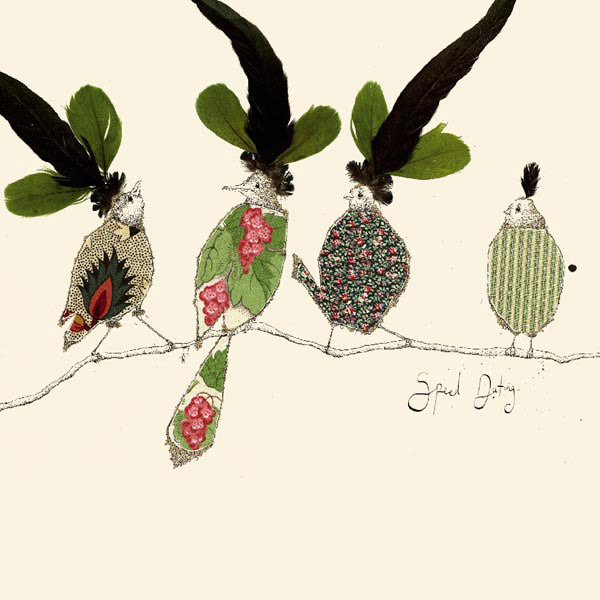
This weekend, the baby meets her third great-grandmother (and second great-grandfather). This time, it is my maternal grandmother and I look forward to having a photo of 4 generations of daughters. It also happens to my grandmother's birthday. On one of my excursions pottering around my local shops, I came across these cards by Anna Wright. I fell in love with her drawings, and could have happily bought the whole series and framed them for my wall. Which if we did not live in a rented flat where we have yet to even hang the paintings and prints we already own, I would have done. Thankfully, I am starting to learn my limits. Instead, I bought a couple. A Prickle of Hedgehogs for my sister; the Chinoise Ladies for my grandmother. 

Her present? Jubilee Lines. A book of poetry commissioned by Carol Ann Duffy for the diamond jubilee. 60 poems, one for every year of the Queen's reign, written about that year, by contemporary poets. My birth year is by Simon Armitage, about the Falklands. I do hope that Grannie hasn't already got it, or read it. It was she and my grandfather who introduced me to poetry as a young child (literally, about 3 or 4, and we had books of poems for 4 year olds and so on) and with whom I have shared years of poetry books and discussions. Carol Ann Duffy is a particular favourite of mine. I have written, I'm sure (although I cannot find it) of stumbling across a collaboration at Glastonbury between Duffy and jazz musician Eliana Tomkins called Rapture, where first Duffy recited the poem, then Tomkins played/sang her version, accompanied by a guitarist. I had left my husband and friends doing their own "thing"and had wondered off on my own, and it was the perfect thing to come across. I remember being particularly taken with the juxtaposition of poety, dried mud, wellies and waterproofs, listening to words of text messages being sent like bullets, the phone as a gun in a holster, words able to wound. 

---

There the great gathered with gallant allies, 
massing on the foreshore, fitted out marvellously. 
Dukes and statesmen, some strutting on their steeds, 
Earls of England, armies of archers, 
stout sheriffs shouting sharp instructions 
to the troops who rallied before the Round Table, 
assigning soldiers to certain lords 
on the seafront, in the south, at their sovereign's say so. 
The barges being ready they rowed to the beach 
to ferry aboard horses and fine battle-helmets, 
loading the livestock in their livery and tack, 
then the tents, the tough shields, tools to lay siege, 
canopies, kit bags, exquisite coffers, 
ponies, hackneys, horses-of-armour . . . 
thus the stuff of stern knights was safely stored. 
And when all stock was stowed they stalled no longer, 
timing their untying with the turn of the tide; 
ships of all sizes ran up their sails, 
all unfurling at the moment of their monarch's command, 
and hands at the gunwales hauled up the great anchors, 
watermen wise to the ways of the waves. 
The crew at the bow began coiling in the cables 
of the carriers and cutters and Flemish crafts; 
they drew sails to the top, they tended the tiller, 
they stood along the starboard singing their shanties.

So the port's proudest ships found plentiful depth 
and surged at full sail into changeable seas. 
Without anyone being hurt they hauled in the skiffs: 
shipmates looked sharp to shutter the portholes 
and tested depth by lowering lead from the luff. 
They looked to the lodestar as daylight lessened, 
reckoned a good route when mist rose around them, 
used their knowing with the needle-and-stone through the night, 
when for dread of the dark they dropped their speed, 
all the seadogs striking the sails at a stroke.

Task Force
Simon Armitage


---
Chinoise Ladies
Strike a Pose
The Crew
A Prickle of Hedgehogs
Speed Dating

By Anna Wright via here and here


Monday, 5 March 2012

The Silence at the Song's End

Last night, an email from an unexpected source made me revisit this post, which I wrote on my previous blog, Little Miss Rachel, in 2007. Inspired by both the email and re-reading my own observations made me dig out the book and start reading. If you enjoy poetry, or have an interest in sailing, you will not be disappointed.

---
From 1 November 2007


“What we were, we will become
As we give our heat to the desert sun”

These are the words which Nicholas Heiney used to describe death; in the summer of 2006 he committed suicide following a long but hidden battle with mental illness. The son of Libby Purves (one of my favourite authors and columnists and for whom I have had great respect since my early teens) Nicholas Heiney first came to my attention in Purves account of a family sailing round England in her book One Summer's Grace. Nicholas was 5 and his sister Rose 3. In reality, Nicholas was the same age as me. I was deeply saddened to read of his death last year.

Yesterday, Purves wrote a column in The Times entitled A Testament of Youth describing her son, his writing and the book that she and Nicholas' professor at his Oxford college have compiled from Nicholas' lifetime of writing. Called The Silence at the Song's End the book attempts to fulfill Nicholas' goal which was "to write something I could show to people". I have not yet had a chance to read this book but I have no doubt that Nicholas achieved this goal many times over.

This poem is one which has been featured in extracts from the book and is so moving it makes my heart hurt, for him, for the sea, for the Nicholas of One Summer's Grace, the family and with hope that wherever Nicholas is now he is able to be singing and sailing through eternity. (Read Frieda Hughes' response to this poem in Monday's Times here)
"The morning runs
on, a springtime secret
through the avenues
and avenues which lure
all sound away

I sing, as I was taught
inside myself.
I sing inside myself
when wild moments
slice some tender evening
like a breeze
that rattles gravel
and digs in the dirt

I sing, as I was told,
inside myself.
I sing inside myself
the one wild song, song that whirls
my words around
until a world unfurls

my ship’s new sail
I catch the dew
and set a course amongst the ocean curls

The silence at the song’s end
Before the next
Is the world"
Nicholas Heiney (1982-2006)

Sunday, 14 August 2011

Cornish Cliffs


Those moments, tasted once and never done,
Of long surf breaking in the mid-day sun.
A far-off blow-hole booming like a gun-

The seagulls plane and circle out of sight
Below this thirsty, thrift-encrusted height,
The veined sea-campion buds burst into white

And gorse turns tawny orange, seen beside
Pale drifts of primroses cascading wide
To where the slate falls sheer into the tide.

More than in gardened Surrey, nature spills
A wealth of heather, kidney-vetch and squills
Over these long-defended Cornish hills.

A gun-emplacement of the latest war
Looks older than the hill fort built before
Saxon or Norman headed for the shore.

And in the shadowless, unclouded glare
Deep blue above us fades to whiteness where
A misty sea-line meets the wash of air.

Nut-smell of gorse and honey-smell of ling
Waft out to sea the freshness of the spring
On sunny shallows, green and whispering.

The wideness which the lark-song gives the sky
Shrinks at the clang of sea-birds sailing by
Whose notes are tuned to days when seas are high.

From today’s calm, the lane’s enclosing green
Leads inland to a usual Cornish scene-
Slate cottages with sycamore between,

Small fields and tellymasts and wires and poles
With, as the everlasting ocean rolls,
Two chapels built for half a hundred souls.

-John Betjeman 

---
Bejteman wrote these words about Daymer Bay and the Camel Estuary and he is buried in the St Endecoc church which is hidden in the dunes near where most of these photos were taken. Betjeman had it about right; "those moments, tasted once, and never done". Certainly I am never done with Cornwall, nor the Camel Estuary in particular, and it is one of the places I am calmest, happiest, most content.

---
photos top L-R: 
boats at Rock; crabs at Lundy Bay; me at Lundy Bay
crabs and more Lundy Bay
Husband on the roof terrace at Rick Stein's seafood restaurant; boats at Rock; Husband waiting for the ferry

photos bottom L-R:
Husband golfing at St Enedocs; ferry from Rock to Padstow; lunch at Rick Stein's cafe
Lunch; surfing at Polzeath; rockpooling at Lundy Bay
more rockpooling; trees on the golf course; Camel Estuary mussels

---
photos by me


Tuesday, 13 April 2010

Melancholy

PMT makes me feel like I want to stab someone. Not that I ever would, of course, but it makes me angry. {what a good job Husband is away}. Beyond grumpy. And melancholy. Which, by some coincidence, was the subject of The Delicious Miss Dahl this evening. Whilst Sophie made a variety of soups and chocolate dishes I grumped my way through a bowl of potato and leek soup and another one of salad. Our computer must have PMT too as it kept stopping and thinking and it took every ounce of self restraint not to thump it hard and throw it out of the window. And then, yet again, Sophie quoted from another of my favourite poems. Either I am extremely predicatable in my tastes or Sophie is...

Razors pain you
Rivers are damp
Acids stain you
And drugs cause cramp
Guns aren't lawful
Nooses give
Gas smells awful
You might as well live.

-Dorothy Parker

---
photo of Sophie Dahl via the BBC website

Tuesday, 30 March 2010

On Waterloo Bridge

On Waterloo Bridge where we said our goodbyes,
the weather conditions bring tears to my eyes.
I wipe them away with a black woolly glove
And try not to notice I've fallen in love

On Waterloo Bridge I am trying to think:
This is nothing. you're high on the charm and the drink.
But the juke-box inside me is playing a song
That says something different. And when was it wrong?

On Waterloo Bridge with the wind in my hair
I am tempted to skip. You're a fool. I don't care.
the head does its best but the heart is the boss-
I admit it before I am halfway across

Wendy Cope

Whilst watching The Delicious Miss Dahl tonight she quoted from this poem, one of my favourites and one which I was given on a poster from the underground as a birthday present just before I left London. And although it made me slightly nostalgic to hear Sophie recite it, I somehow feel more at peace with having left London. A part of my heart will always be in London, but another part, I think, belongs on Exmoor.